 © Sandycinecam/shutterstock.com
Overview
India is the fourth largest economy in the world, and its GDP is projected to reach $7.3 trillion by 2030. On this trajectory, the biggest challenge is to fulfil national and individual aspirations in a sustainable way—without causing irreversible damage to nature’s systems. We need judicious use of our finite resources in ways that benefit all strata of society.
It is also imperative that India champions the global call to reverse nature loss by 2030 and takes local actions. Conserving nature through diverse, inclusive approaches would help in addressing climate change and halting the drivers of deforestation and degradation of land, air and freshwater.
Hence, it is critical that planners and policy makers understand the value of biodiversity and intact ecosystems—and how to manage them. They also need to recognize and control the problems that are emerging due to rapid land-use change and destruction of nature. Cohesive policies by the Central and state governments are integral to achieving a socially equitable and environmentally sustainable pathway to India’s economic growth.
Eradication of poverty, minimising wastage, promoting sustainable practices, and protecting and managing natural resources are essential for India to develop sustainably, reduce disparity and bring about inclusive pro-poor growth.

OUR WORK – POLICY ENGAGEMENT
The main aim is to achieve effective, inclusive and accountable governance mechanisms to conserve nature at the local, regional and national levels.

KEY PILLARS OF OUR WORK:
Challenge: India faces the dual challenge of economic growth and environmental conservation. The country aims to achieve broad-based economic growth to ensure balanced development across all regions, states and sectors. India is also committed to maintain a clean, green and healthy environment. Its aspiration to lift its people out of poverty and become a 40 trillion-dollar economy by 2047 rests heavily on the success of its efforts to mainstream the judicious use of finite natural resources. Hence, there is an urgent need to ensure conservation of nature and enhance its ecological services. In order to avoid future pandemics, build economic resilience and enhance human well-being, our national and state governments, businesses, civil society and the public need to adopt practices that ensure basic amenities like clean water, air, food and energy remain available to all. These measures will also contribute towards meeting the 2030 Agenda for Sustainable Development—adopted by all United Nations member states in 2015—and our commitment to biodiversity conservation.
Approach: Enabling more ambitious sustainable governance of our natural resources to ensure that we deliver healthy ecosystems to future generations. This means working at different levels: global policy agreements, public and private financial investment and market standards, and national and local decision-making. The programme engages with policy makers at global, national and local levels to push for an inclusive approach to biodiversity conservation that provides ecological stability while ensuring socio-economic well-being. The programme provides strategic and technical support to influence policies, which remain locally relevant and also fulfil India’s global commitments.
Challenge: India recognises the value of decentralised models of community-owned governance, awarding funds and power to panchayats for setting up development agendas as well as governance within the area of their jurisdiction. The same holds true for tenurial security to tribal and local communities through the Forest Rights Act 2006 by recognition of Community Forest Resource use areas. However, there is a gap in awareness among certain sections of communities about their rights. Most villages follow a hierarchical caste, class and patriarchal system, which leaves little room for marginalised groups to engage meaningfully. Civil society organizations (CSOs) and community-based organizations (CBOs) representing marginalised groups have limited political power and access to resources, face discrimination and social exclusion, and have difficulties in dealing with legal and regulatory processes. There is also a gap in understanding among planners, communities and other stakeholders of national commitments (SDGs/GBF/NDC) about their roles in adoption of sustainable development pathways.
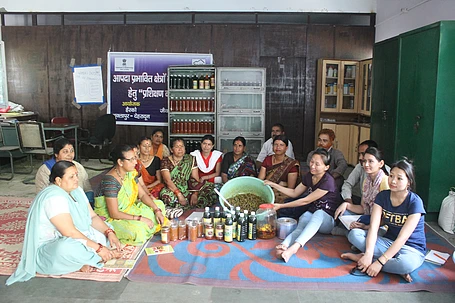
Approach: Taking cognisance of broader policy and regulatory frameworks, which promote empowerment and decision-making by local communities, it is critical that proactive engagement and capacity building is undertaken more effectively with local CBOs and other village-level institutions. WWF-India supports communities to manage their resources in a sustainable manner, make informed decisions, identify sites and develop local conservation actions for these areas, which have immense ecological and cultural values. It also aims to bring alignment between the communities’ development priorities and conservation of their resources. Research, analysis, capacitating and strengthening institutions are key to empowering the leadership of local communities. With a strong focus on women and youth, WWF-India helps to establish or scale up decentralised models of inclusive conservation and governance.
Challenge: India has laws, regulations and policies that enable inclusive conservation of resources. But it is often difficult to understand and use the right provisions at the ground level. There is also a lack of understanding about the role nature plays in our lives and the importance of conserving it. Therefore, governance mechanisms—from panchayats to the highest level—often do not use existing laws and policies to prevent damage to the environment, reverse nature loss and promote human well-being.
Approach: WWF-India works towards sensitising governments, businesses, judiciary, tribal and local communities as well as NGOs and CBOs about the significance of natural ecosystems, their fragility, and the mechanisms already in place for their conservation. Sensitisation programmes, environmental courses, citizen outreach as well as proactive and sustained engagement can tackle conservation challenges and work towards building a future in which humans live in harmony with nature.
Challenge: WWF-India works across many ecologically rich areas, which are home to tribal and local communities. Hence, it is essential to have processes that prevent any undue harm either to nature or people. It is also important that WWF-India maintains legal compliance, prevents reputational damage and cultivates a secure culture for its team and for the people it works with. Without an inclusive and simple mechanism, it can be difficult to resolve concerns and/or incorporate suggestions in a timely manner. Similarly, the organization also needs processes to ensure respect for its partners and communities, build mutual understanding, strengthen accountability, and ensure effective collaboration and cooperation.
Approach: WWF-India has developed the Environmental and Social Safeguards Framework. It provides an institutional mechanism to prevent and mitigate undue harm to people and their environment while implementing conservation programmes. This helps to assess a broad range of environmental and social risks, be mindful of the varied challenges and needs across different regions, deliver better conservation outcomes and enhance the environmental and social sustainability of all programme interventions. The organization is using this framework across all its landscapes to design and implement projects better and contribute to the well-being of tribal and local communities.
 © shutterstock.com
Support Conservation
Your contribution helps us in protecting wildlife, restoring habitats and building a better future for people and nature.
Donate